When you can stop, what you can spend, and how to make it last for the rest of your life.
Speak to an adviser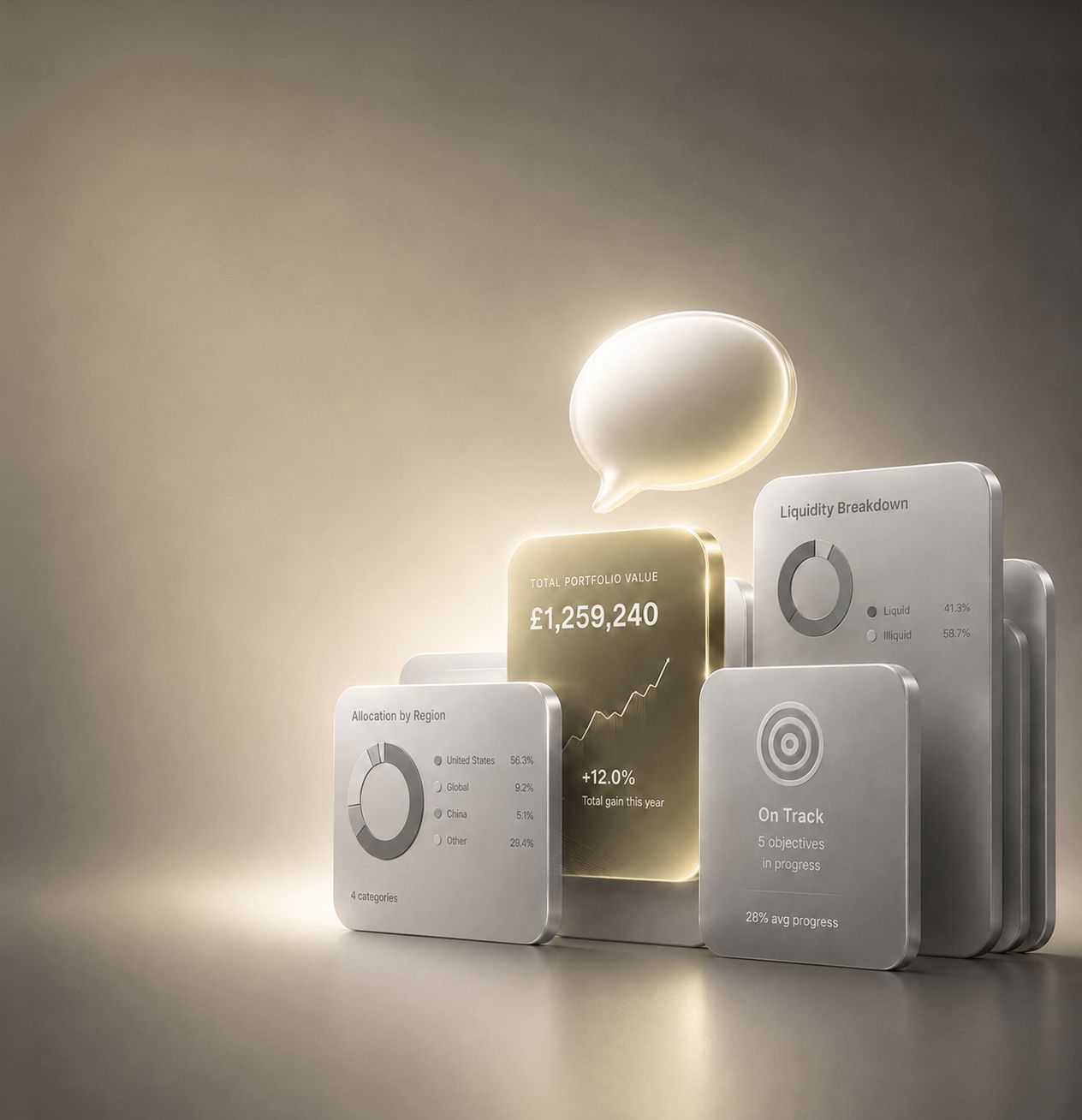
Six steps, from the first conversation to the income you live on. The first is a free half hour and commits you to nothing.
You tell us when you would like to stop working and the life you want afterwards. We tell you whether we can help, how we would go about it, and what it would cost.
Workplace schemes, SIPPs, final salary pensions, your State Pension forecast, ISAs and property. We trace the pots you have lost track of and check each one for guarantees worth keeping before anything moves.
A year-by-year cashflow forecast of your income, spending and savings, running to the end of your life. We stress-test it against inflation, a market fall in your first year of retirement and the cost of care later on, so you can see when you can stop and what you can safely spend.
Your money arranged by when you will need it: cash for the next year or two of income, a lower-risk portfolio for the years after, and money you will not touch for a decade or more invested for growth. A fall in markets never forces you to sell at the wrong moment, and our investment committee manages it all in-house.
Which pot to draw from, in what order, and how much each year. Tax-free cash, pension income up to your personal allowance and basic-rate band, ISAs, savings and capital gains, split between you and your partner where that helps. With pensions counting towards inheritance tax from 2027, the order matters more than it used to.
A review at least once a year, and whenever tax rules, markets or your plans change. In between, your income, pensions and investments are all visible in Helix.
 5-star rated, 100+ reviews
Former banker
IQ client since 2011
“When IQ look at my finances, it makes me feel frankly, untroubled.”Watch more client stories →
What people ask in the years before they stop working, and the advice behind each answer.
Your savings, pensions and spending projected year by year, so the date you stop is based on the numbers rather than a guess, along with what retiring two years earlier would cost.
Drawdown keeps your pension invested and flexible. An annuity guarantees an income for life. Many people are best served by some of each, and we show what every option does to your plan.
Tax-free cash, pension income, ISAs and savings, drawn in the order and the amounts that keep you in the lowest tax band you can manage, year after year.
Fewer pots to track and usually lower charges, once we have checked that none of them carries a guaranteed annuity rate, protected tax-free cash or other benefit you would lose by moving.
From April 2027 most unused pensions count towards your estate for inheritance tax. We work out what that means for your family and change the order you spend things in to suit.
Downsizing, helping the children, a change in health or the cost of care, all built into the plan from the start, so a change in circumstances never means a decision made in a hurry.
Three birthdays change what you can take, what you receive and what your family inherits.
The earliest most people can access a personal or workplace pension. Up to a quarter can usually be taken tax-free, to a maximum of £268,275 across all your pensions.
It is not paid automatically, so you need to claim it. Putting it off increases what you receive, and gaps in your National Insurance record can often be filled first.
Die before 75 and your beneficiaries can usually draw an inherited pension free of income tax. From 75 onwards, they pay income tax on it at their own rate.
Based on the rules for the 2026/27 tax year. State Pension age depends on your date of birth, and tax treatment depends on your circumstances and may change.
Most unused pension funds will be added to your estate and could be taxed at 40%. After 75, your beneficiaries may then pay income tax on what is left. Pensions passed to a spouse or civil partner stay exempt.
If your pension was the pot you planned to leave untouched, the plan needs another look.
There is no single figure. It depends on what you will spend, when you stop, what other income you have and how long your money has to last. Rules of thumb built on averages tend to be wrong for exactly the people who rely on them.
A cashflow model gives you your own number: the pension and savings you need to fund the retirement you have described, and how that changes if you stop earlier, spend more in the first ten years, or markets disappoint.
Ideally ten years or more before you want to stop, when there is still time to raise contributions, use the tax relief on offer and set the right level of investment risk. The five years before retirement matter most, because that is when decisions about tax-free cash, income and timing get made.
It is never too late to start, and plenty of people come to us already retired.
Neither is better in general. Drawdown keeps your pension invested so you can vary your income and pass on what you do not use, but the money can run down if markets fall or you draw too much. An annuity swaps some or all of your pension for a guaranteed income for life, with no investment risk and less flexibility.
Many retirees use both: an annuity to cover essential bills, and drawdown for everything else. We model each option so you can see the trade-off before you commit.
By when you will need it rather than as one pot. Money for the next year or two of spending is best kept in cash, so a market fall never forces you to sell. Money for the following few years sits in a lower-risk portfolio, and anything you will not need for ten years or more can stay invested for growth, because retirement can last three decades and inflation keeps working throughout.
As each bucket is spent, it is topped up from the one behind it, usually after good years in markets rather than bad ones.
By deciding how much comes from each source each year. Taking all your tax-free cash at once is not always the best move, and drawing pension income up to your personal allowance or basic-rate band, then topping up from ISAs and savings, can cut the total tax you pay over a retirement considerably.
Couples can often do better still by splitting income between them. We set the order and the amounts, and revisit them every year.
Often, but not always. Bringing old pensions together makes them easier to manage, usually lowers the charges and makes drawing an income simpler. Some older schemes carry guaranteed annuity rates, protected tax-free cash or final salary benefits that would be lost in a transfer, so we check every one before recommending a move.
For deaths on or after 6 April 2027, most unused pension funds and death benefits will be included in your estate for inheritance tax, which is charged at 40% above the available nil-rate bands. Pensions left to a spouse or civil partner remain exempt.
If you die after 75, your beneficiaries may also pay income tax on what they draw. For many families that reverses the old advice of spending other savings first and leaving the pension until last, so your drawdown order, gifting and nominations are all worth reviewing now.
You do not have to have one, and the government's free Pension Wise service offers guidance on your options from age 50. Advice goes further: a recommendation specific to you, with the adviser responsible for it. For a final salary pension worth £30,000 or more, taking regulated advice is a legal requirement before a transfer.
We are independent and Chartered, so we can recommend from across the whole market rather than one provider's range.
The first meeting is free. After that it depends on whether you need a single piece of advice, such as how to take your pension, or ongoing advice and investment management. We publish the whole fee structure, so you can check the numbers before you speak to anyone.
Half an hour with an adviser about when you would like to stop and what you would like retirement to look like.
Book a call